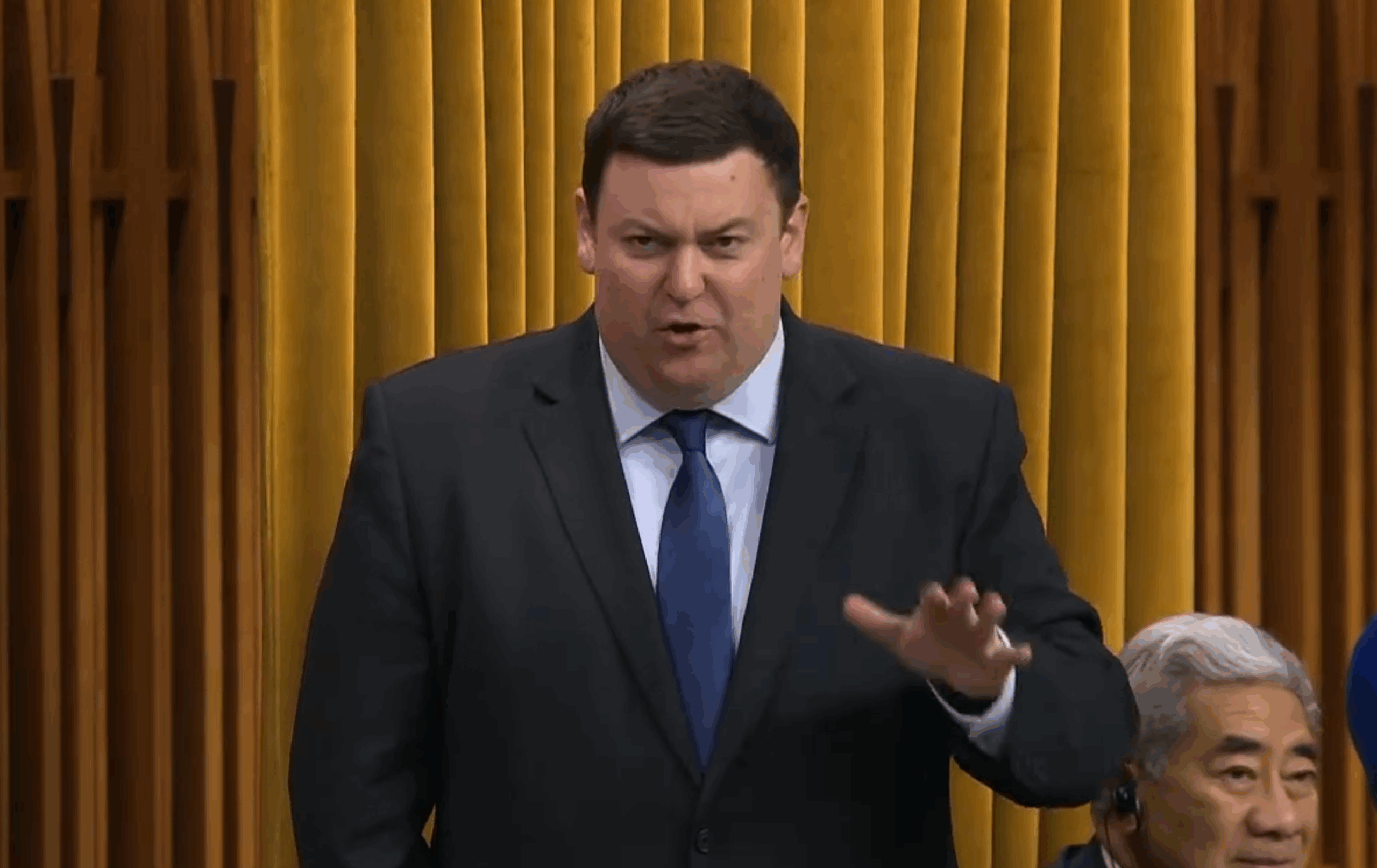

Bill C-9 and the Bloc–Liberal deal go after a key protection for religious speech. Every Canadian, believer or not, should be paying attention.
When governments start rewriting the rules on what you’re allowed to say, they never stop at the edges. They always promise they’re only targeting “extremists.” Then the definition of “extremist” quietly expands.
That’s exactly the concern now surrounding Bill C-9, the federal Combatting Hate Act, and a new deal between the Liberals and the Bloc Québécois to remove the religious exemption from Canada’s hate-speech laws.
Conservative MP Michelle Rempel Garner is sounding the alarm, warning that this combination effectively opens the door to criminalizing religious belief, or at the very least, criminalizing the open expression of traditional religious teaching.
This isn’t clickbait. The text and the political signals from Ottawa back up the concern.
What Bill C-9 Actually Does
On paper, Bill C-9 is sold as an upgrade to Canada’s fight against hate:
- It removes the requirement that the Attorney General approve prosecutions for certain hate-propaganda offences, letting police and Crown proceed directly.
- It creates new offences around hate-motivated crime and the display of certain symbols in public.
- It introduces new offences related to intimidating or obstructing access to religious or cultural buildings, supposedly to protect people going to worship or community events.
So far, that sounds like the usual “we’re being tough on hate” pitch Canadians have heard before.
But buried in the structure of the law is something much more serious: it interacts with an existing religious defence that has been part of Canadian law for decades.
The Religious Exemption They Want to Remove
Under current law, Canada bans the wilful promotion of hatred against identifiable groups. At the same time, there has been a narrow defence for people who, in good faith, express opinions based on religious belief or religious texts, even if those opinions are unpopular or controversial.
That exemption is not a free pass to incite violence. Courts have still upheld limits on extreme propaganda. But the protection exists because Parliament recognized a simple truth:
In a pluralistic democracy, people must be free to state what their faith teaches without living in fear that a prosecutor or activist judge will decide their scripture is now a crime.
Now, Bloc MPs have been openly pushing to delete that exemption, and the Liberal government has signaled support.
A federal minister has already said he doesn’t think people should be able to point to religious texts as a shield in hate-crime cases, explicitly naming major world scriptures as examples.
Put bluntly: they want the full force of hate-speech law to apply even when someone is speaking from the standpoint of sincere religious belief.
“Criminalizing Belief” – What Critics Mean
When Rempel Garner says the government is “criminalizing religious belief,” she’s describing where this leads, not just the technical wording of the bill.
Combine these elements:
- Lowered thresholds & vaguer definitions. C-9 replaces language around “extreme” hatred with broader wording like “detestation” or “vilification,” which can be stretched to cover sharp moral disagreement, especially on sensitive social issues.
- No Attorney General filter. Police can bring charges without a higher-level gatekeeper stepping in to say “this is a bad test case” or “this is obviously just a sermon, not incitement.”
- Removal of the religious defence. Once the exemption is gone, a priest, pastor, imam, rabbi or layperson quoting or summarizing traditional teaching could be judged solely through the lens of “does someone find this hateful?” with no explicit statutory shield.
That’s how you get from “we’re only targeting hate” to “your beliefs might be prosecutable if the wrong person in power decides they don’t like them.”
You don’t need imagination for this. Canada already has a history of tribunals and courts wrestling with religious speech cases, and the Charter has been used to protect religious expression from overreach.
C-9 and the proposed amendment don’t strengthen that protection. They move in the opposite direction.
Supporters’ Argument vs. Reality
Supporters of the change argue something like this:
“No one should be able to hide behind religion to attack others. If speech rises to the level of hate propaganda, it shouldn’t matter whether someone says a religious text inspired it.”
That line sounds reasonable at first glance. No one sane wants genuine calls to violence or dehumanization excused by “my faith made me do it.”
The problem is where the line gets drawn:
- Canada already has criminal prohibitions on direct incitement of hatred and promotion of hatred, including toward religious groups.
- Those laws already survived Charter scrutiny as a “reasonable limit” because there were safeguards and narrow defences, including for religious expression.
By stripping away those safeguards while expanding the state’s tools, Ottawa is asking Canadians to trust that future prosecutors, police, and judges will always interpret the law fairly, even as political pressure ramps up on sensitive topics.
Anyone who has watched the last decade of Canadian politics knows that’s a fantasy.
Why This Should Matter Even If You’re Not Religious
You don’t have to be a weekly churchgoer or part of any faith community to see the danger here.
Freedom of religion in Canada isn’t just the right to quietly believe something in your own head. It has always included:
- the right to hold a belief
- the right to speak about that belief
- the right to teach, worship, and share it publicly without fear of punishment, as long as you’re not crossing into true criminal advocacy of violence.
Once the state starts saying, “This category of belief is now suspect, and your long-standing doctrines might be treated as hate,” you’ve effectively turned religious freedom into a conditional permit.
Today the target might be one doctrine or one community.
Tomorrow it might be another.
And eventually, it just becomes normal for the government to treat belief as a problem to manage.
The Bigger Pattern
C-9 is not happening in isolation.
- We’ve already seen failed or stalled attempts to introduce broad “online harms” and “harmful content” regimes that worried civil-liberties groups across the spectrum.
- Provinces like Quebec have passed aggressive secularism laws, restricting religious symbols in public life and invoking the notwithstanding clause to shield themselves from Charter challenges.
Layer C-9 on top of this, with the explicit goal of removing a religious protection, and the direction of travel is obvious: more state control over what citizens can openly believe and say.
What Now?
If this goes through as signaled, Canada will move from:
“You can freely state your faith, within narrow limits, even if it offends”
toward:
“Your faith is acceptable until we decide a part of it crosses our new, flexible line.”
That’s not a small tweak.
It’s a fundamental shift in the relationship between the state and conscience.
If you care about this, regardless of how you vote:
- Contact your MP and demand they oppose removal of the religious exemption in C-9.
- Support MPs who are raising the alarm, like Michelle Rempel Garner and others speaking out on this file.
- Share explanations, not just slogans. Most people have no idea what C-9 actually does. They just hear “combatting hate” and assume it’s harmless.
Canada was built on the idea that the state doesn’t own your conscience.
If Parliament starts blurring that line in the name of “safety,” then this fight isn’t about left versus right anymore.
It’s about whether you still get to believe anything the government finds uncomfortable.
Watch on YouTube:
SOS : Liberals announce criminalization of religious belief C-9 AMENDMENT EXPLAINED